How to choose
A sledge that lasts, and the load rating that decides it
The sledge shelf is the friendliest on this site: almost every listing publishes dimensions and a load rating, which is more than can be said for the ski boots. What it divides on is weight, because somebody walks the sledge back up the hill, and material, because beech and plastic age completely differently.
By Jean-Benoit Buisson
Six sledges, from one kilo to six and a half.
1. The one you can carry with one finger
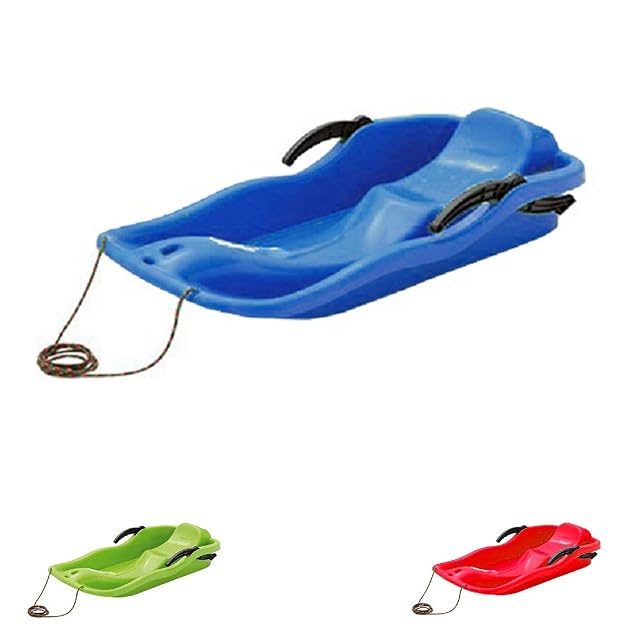
The Prosperplast is 1.3 kg, 87 × 40 × 18 cm, plastic, with a rope and brakes.
At that weight a child carries it up themselves, which is the whole argument. It is also the cheapest thing on the shelf.
2. The slider that thinks about cold
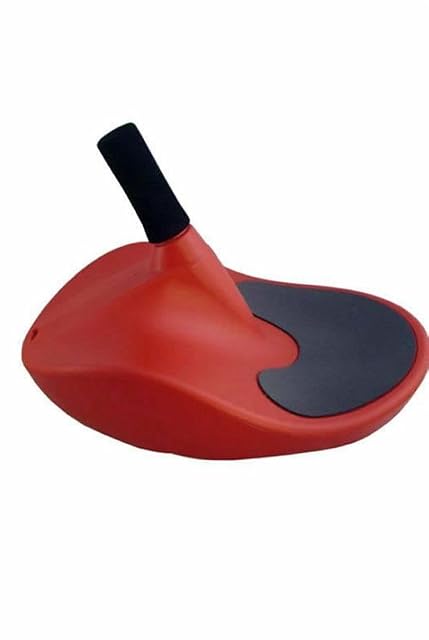
The AlpenGaudi Zipfel is a 57 cm one-piece HDPE slider with a low centre of gravity, for children and adults.
HDPE stays flexible when it is cold, and it is the only sledge here whose material is chosen and stated for that reason. Cheap sledges crack in February, and this listing is the one that addresses why.
3. The heaviest, and the one with a temperature rating
The Tenddya is 50 × 120 × 38 cm, a 100 kg load, 6.5 kg, steel and HDPE, rated to −20 °C.
Six and a half kilos is an adult’s carry. In exchange it is the only sledge here with a stated cold rating, and it arrives dismantled.
4. The beech horn sledge
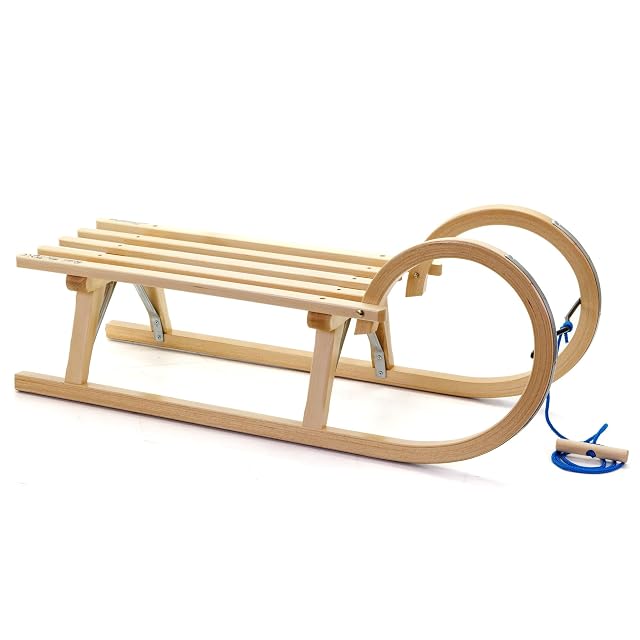
The Holzfee is 95 cm of beech with laminated runners, curved metal rails and a 5 mm rope.
Metal rails on the runners are what keeps a wooden sledge steering after three winters. This is the classic object on this shelf, and it will outlast every plastic one here if it is stored dry.
5. The one that folds
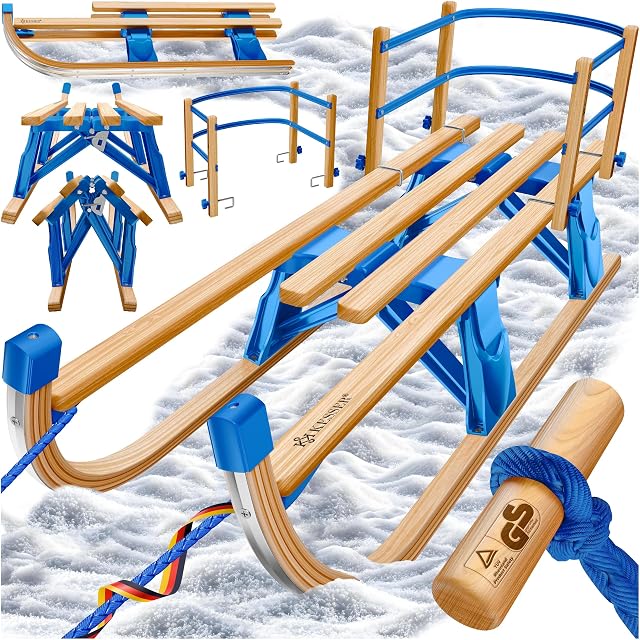
The KESSER is a 110 cm folding beech davos, 70 × 30 cm seat, 120 kg load, 4.3 kg, with a TÜV/GS mark claimed.
Folding is the answer to the boot of a car. The certification claim carries no certificate number in the listing, and this page reports the claim as a claim.
6. The one with two steered runners
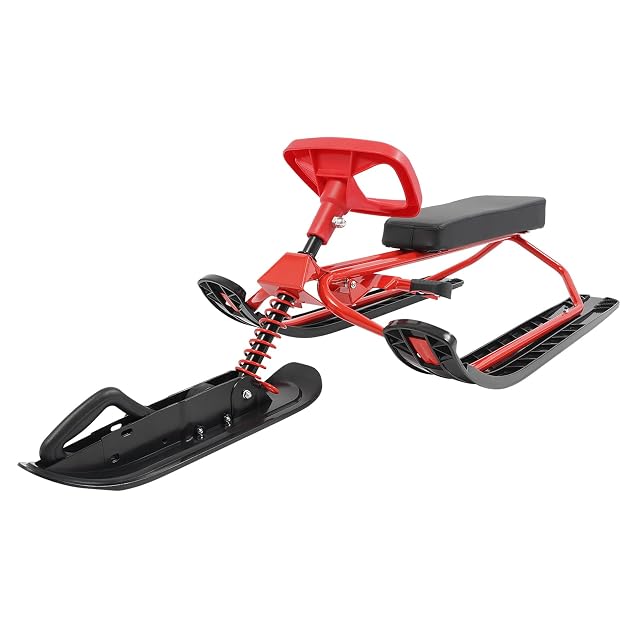
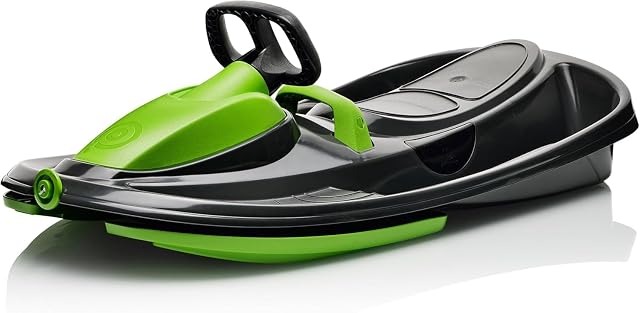
The ToyToyToy is 99 × 56 × 28 cm, 120 kg, 3.95 kg, with differential steering and a solid brake.
Differential steering means the runners turn against each other rather than the sledge sliding sideways. On a groomed run with a track, it is the difference between choosing a line and taking one.
Questions this guide leaves open
Wood or plastic?
A beech horn sledge steers on its runners, lasts decades if it is stored dry and is heavy to carry up. A plastic slider is light, cheap and slides on anything, and it becomes brittle with age and cold. One sledge on this shelf names HDPE specifically for what cold does to plastic, which is the only listing here to address it.
How much does the weight matter?
On a hill you walk up ten times with a child, a great deal. The lightest sledge here is 1.3 kg and the heaviest is 6.5 kg, and the heavy one is the one an adult carries. It is the figure that decides how many runs the afternoon holds.
Does a brake work?
A steel-clawed brake bites and a plastic one scrapes. Two sledges here publish a brake as a named part rather than a mention, and one of them pairs it with a steel steering gear. What no listing on this shelf publishes is a stopping distance, and this page does not invent one.
What does a load rating actually mean?
The weight the frame is stated to carry, published by most of this shelf — from 60 kg to 200 kg. Read it as the seller’s figure rather than a tested one; no listing here names the standard it was measured against, and one claims a TÜV/GS mark without printing a certificate number.