Teeth per centimetre, a diamond grit, and a guide with an angle
Ski files and edge guides, compared
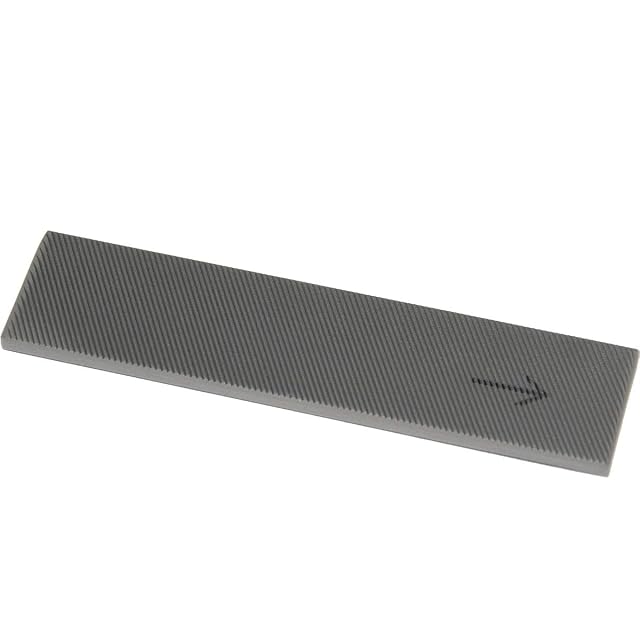
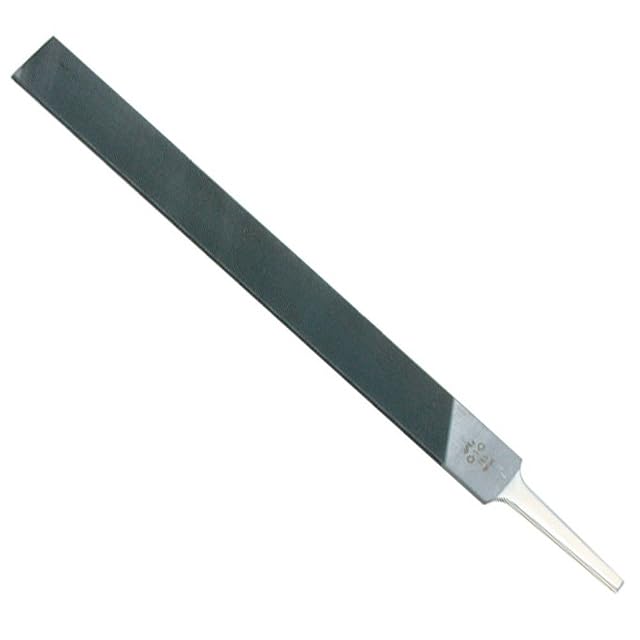
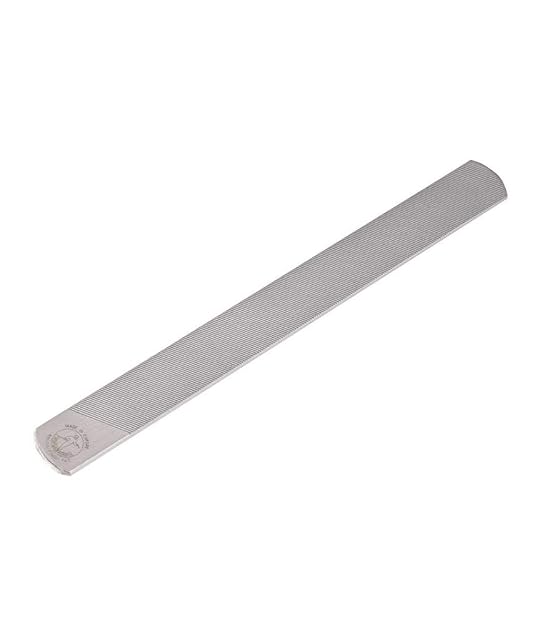
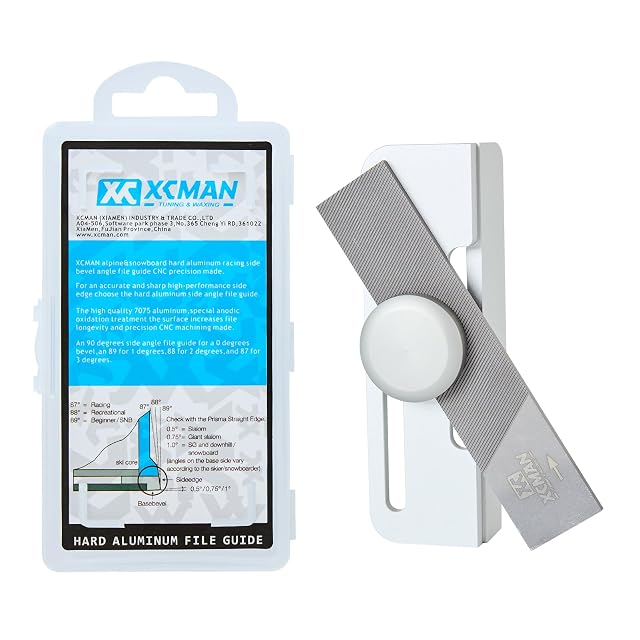
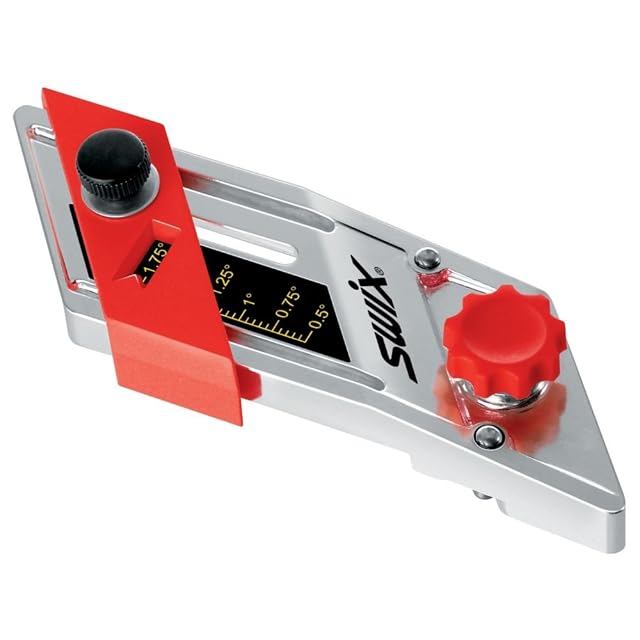
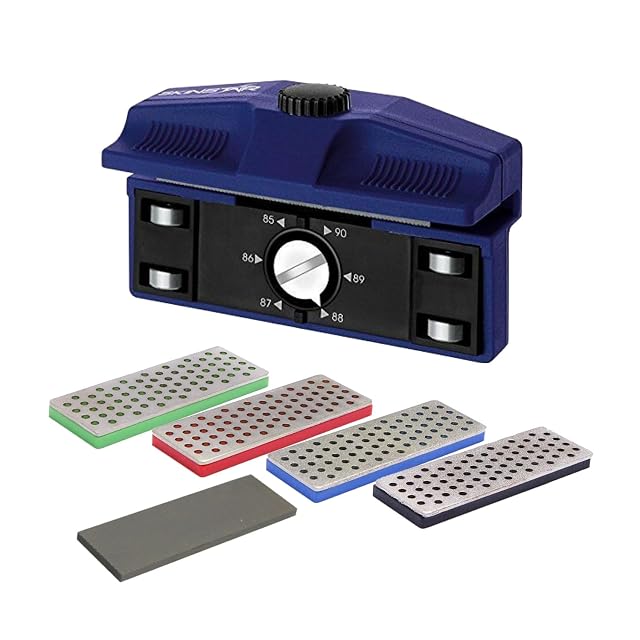
An edge is sharpened by a file held at an angle, and the two halves of that sentence are the two halves of this shelf: three files, two guides that hold one, and a six-piece set that is both. The file is graded by its cut, printed here in teeth per centimetre, and the three steel files line up as 14, 16 and 18 — 14 on a 100 mm medium-cut file at 15.95 €, 16 on a hard-chromed 150 mm World Cup file at 21.80 €, 18 on a 150 × 15 mm racing file at 22.95 €. More teeth means a finer cut: the coarse end removes metal and leaves a surface that catches, and the fine end finishes and will not correct damage. The length follows the job — 80 mm and 100 mm for short work, 150 mm for a full pass down an edge — and a longer file bridges dents instead of following them. A diamond file is the second stage and a different tool: the 79.95 € set here carries four grits, 240, 360, 500 and 1000, used to deburr after the steel file and to touch up a still-sharp edge without cutting it. Then the part that decides whether any of it is any use: the guide. It fixes the bevel, and the two on this shelf fix different ones — the side guide at 31.99 € is sold one angle at a time, 90° down to 85° in whole degrees, and the base guide at 69.60 € adjusts from 0.5° to 2.0° in steps of 0.05°. Filing freehand does not produce an angle, it produces a rounded edge, and a guide with a clamp holds the file rather than asking a third hand to. One warning about the listings themselves: two of them have been machine-translated into nonsense, and one sells a football boot in its first bullet point. We compare tool, cut, teeth per centimetre, length, grit, guide angle and clamping.