Getting started
Cross-country from nothing, and what a set leaves out
Cross-country is the one discipline on this site you can start completely for the price of a single alpine boot — if you buy the right box. The shelf sells everything from a bare ski to a five-piece set with a bag, under titles that all read like sets. This page sorts them by what is actually inside.
By Jean-Benoit Buisson
Six listings, sorted by what is in the box.
1. The cheapest way onto a track, for a child
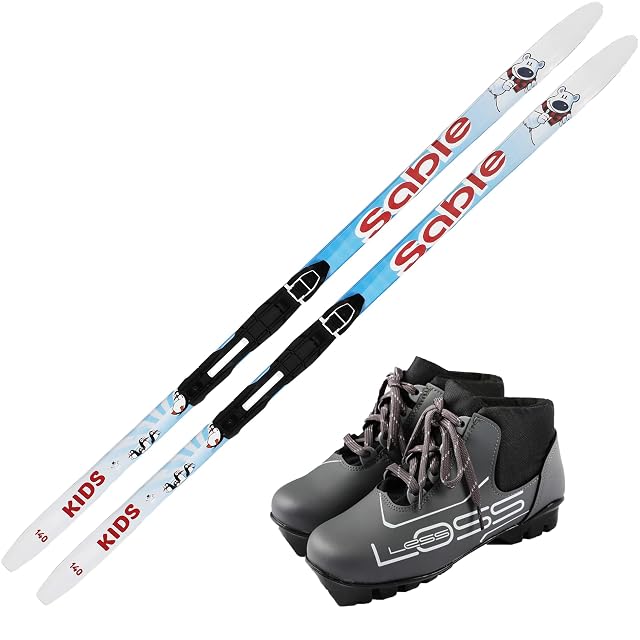
The Skiwax Europe junior set is 120 cm: ski, NNN binding and NNN boots, in one box.
It is the cheapest complete way onto a cross-country track on this site. Poles are not included, and on a 120 cm child’s set that is the smallest of the outstanding purchases.
2. The same box, adult sized
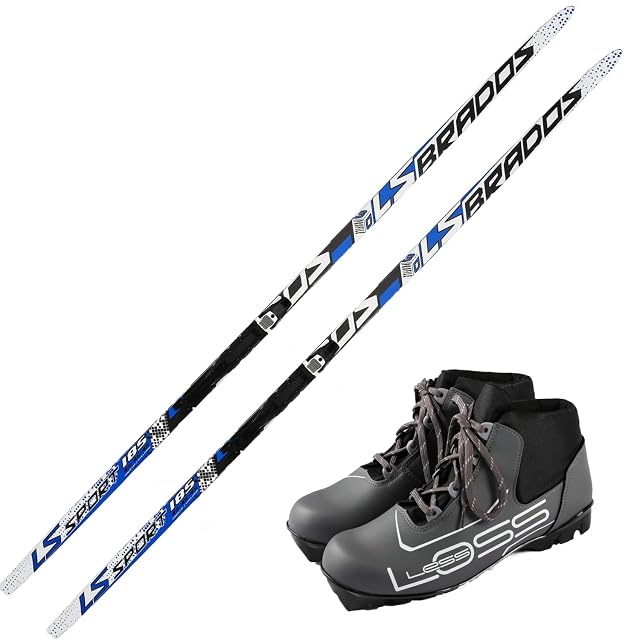
The adult version is 190 cm, with ski, NNN binding and boots.
Its brand field disagrees with its own title twice over, which is why it appears here under a name neither title uses. The contents are the point.
3. The most complete set here
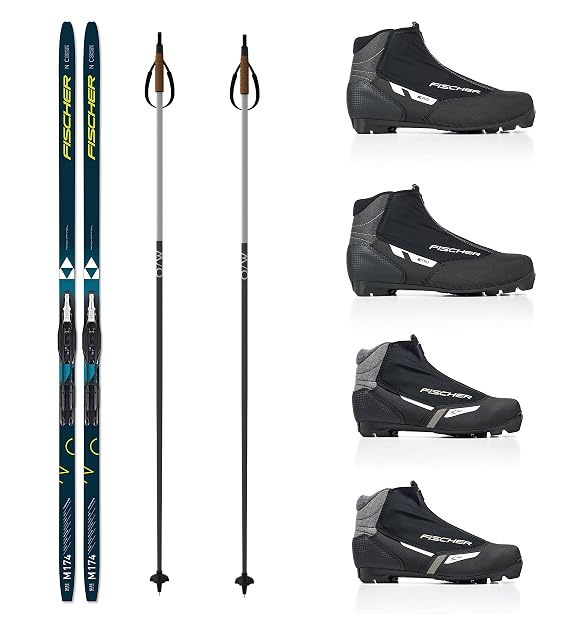
The Fischer set is 184 cm: ski, IFP binding, boots and poles, and it prints the weight band the length was chosen for — 80 to 94 kg.
That last figure is the one a cross-country ski is actually chosen by. Length follows body weight, because the camber has to be pressed flat by the skier for the grip zone to reach the snow.
4. The one with a bag
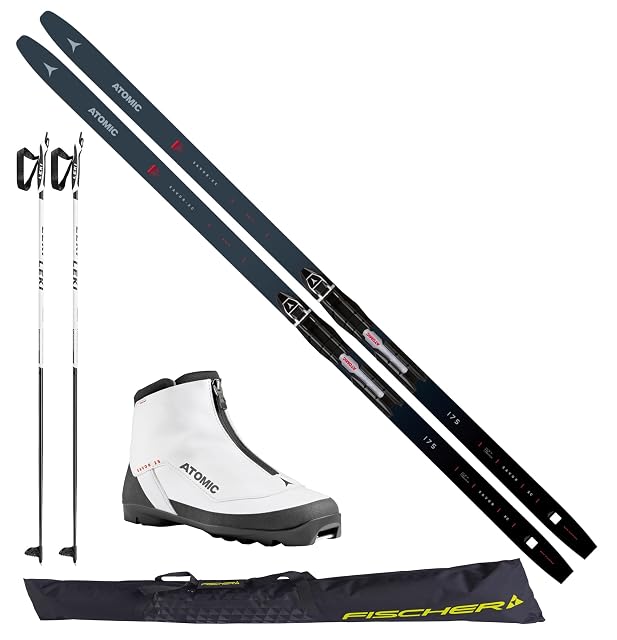
The Atomic set is 175 cm for 65–80 kg: ski, Prolink binding, women’s boots, poles and a length-adjustable bag.
Five pieces, and the weight band, the boot fit and the pole rule are all stated in writing.
5. The one that changes the grip question
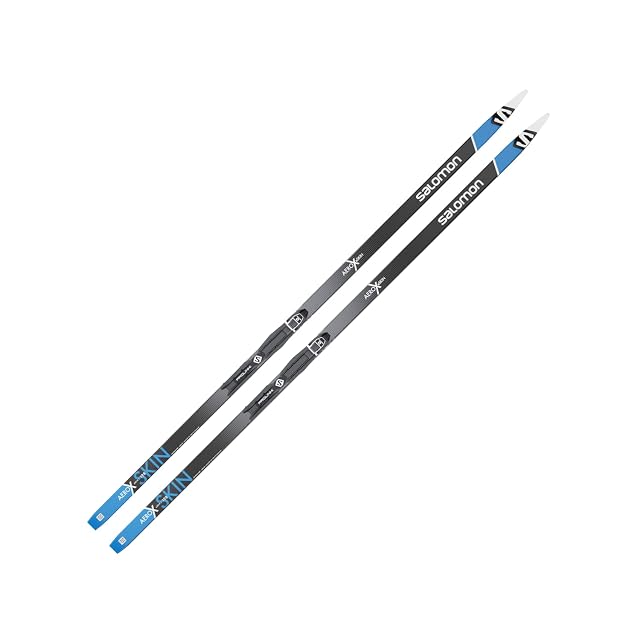
The Salomon set carries a replaceable skin insert in the kick zone instead of wax or scales, and it is the only ski here whose maker prints how long that skin lasts.
Skin grips better than a scale pattern and needs no wax box in a car park. It also wears out, which is why the replaceability and the stated life are the two things worth reading.
6. The one that is not a set
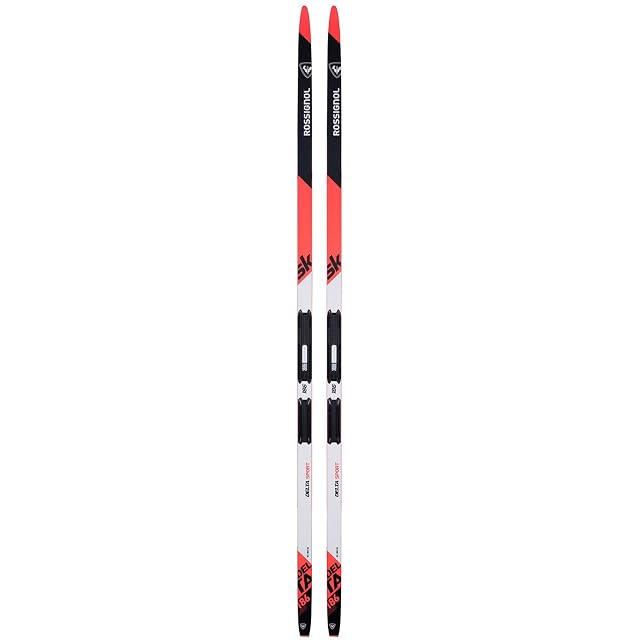
The Rossignol skating ski is 163 cm, sold flat, with its level stated as intermediate.
It is the only skating ski on this shelf and the only ski here sold without a binding. Both of those facts follow from the same thing: a skate boot decides the binding, so the ski waits.
Questions this guide leaves open
What does a complete set have to contain?
Ski, binding fitted, boots and poles. Anything short of that is a second purchase before the first outing, and boots are the item most often missing — a boot has to match the binding system, so buying it afterwards narrows the choice rather than widening it.
NNN, Prolink, IFP — do they matter?
They are binding-and-boot systems, and the boot must match the binding. Within a set it is already decided, which is most of the argument for buying a set. Buying a ski and boots separately means checking that the two systems are compatible, and the listings on this shelf name the system precisely for that reason.
Wax, scales or skin?
Three ways to stop the ski sliding backwards when you push. Wax grips best and has to match the snow temperature; scales need nothing and are slower; a skin sits between the two and wears out. One ski on this shelf carries a replaceable skin insert and prints how long it lasts, which is the only durability figure on the shelf.
Classic or skating?
Classic runs in the set tracks and is what almost everyone starts on. Skating needs a groomed flat surface, a different boot, a different ski and more fitness. There is one skating ski on this shelf and it is sold flat, because the boot decides the binding.